What can a private investigator do, and what can't they? It's the most common question we get on a first call, usually put as: can you actually do that legally? It's a fair question. The popular idea of what a private investigator does comes largely from film and television, and the gap between that and what Australian law actually allows is substantial.
Where the Line Sits, and Why It Matters
This article walks through what a licensed private investigator can lawfully do in Australia, what they cannot, and why the difference matters, not just for the investigator but for the evidence itself. Evidence gathered outside the law is rarely useful evidence. In many cases it actively damages the matter it was meant to support.
After 15 years as a licensed investigator in Sydney and across New South Wales, working alongside family lawyers, insurers, corporate clients and individuals, this is our working summary of where the line sits.
The Licensing Framework
Every private investigator operating in Australia must hold a state-issued investigator licence. The licence is issued by the police or state regulator and requires character checks, training and ongoing compliance. The framework varies state by state. In Queensland, the licence sits under the Security Providers Act 1993. In New South Wales, private investigators are licensed by the NSW Police Force under the Security Industry Act 1997.
What this means in practice:
- A licensed investigator must work within the scope of their licence, and for work in another state, either hold that state's licence or use a locally licensed partner
- The licence number should be readily available to a prospective client on first request
- An "investigator" without a current licence number is not legally a private investigator, and any evidence they gather is highly vulnerable to challenge
This is the first checkpoint, and it matters more than people realise. Stirling Investigations operates under NSW Master Licence 000108692.
What Can a Private Investigator Do Lawfully?
The lawful tools of an Australian private investigator are narrower than people assume, but they are powerful when used well. The core categories:
Surveillance from public space
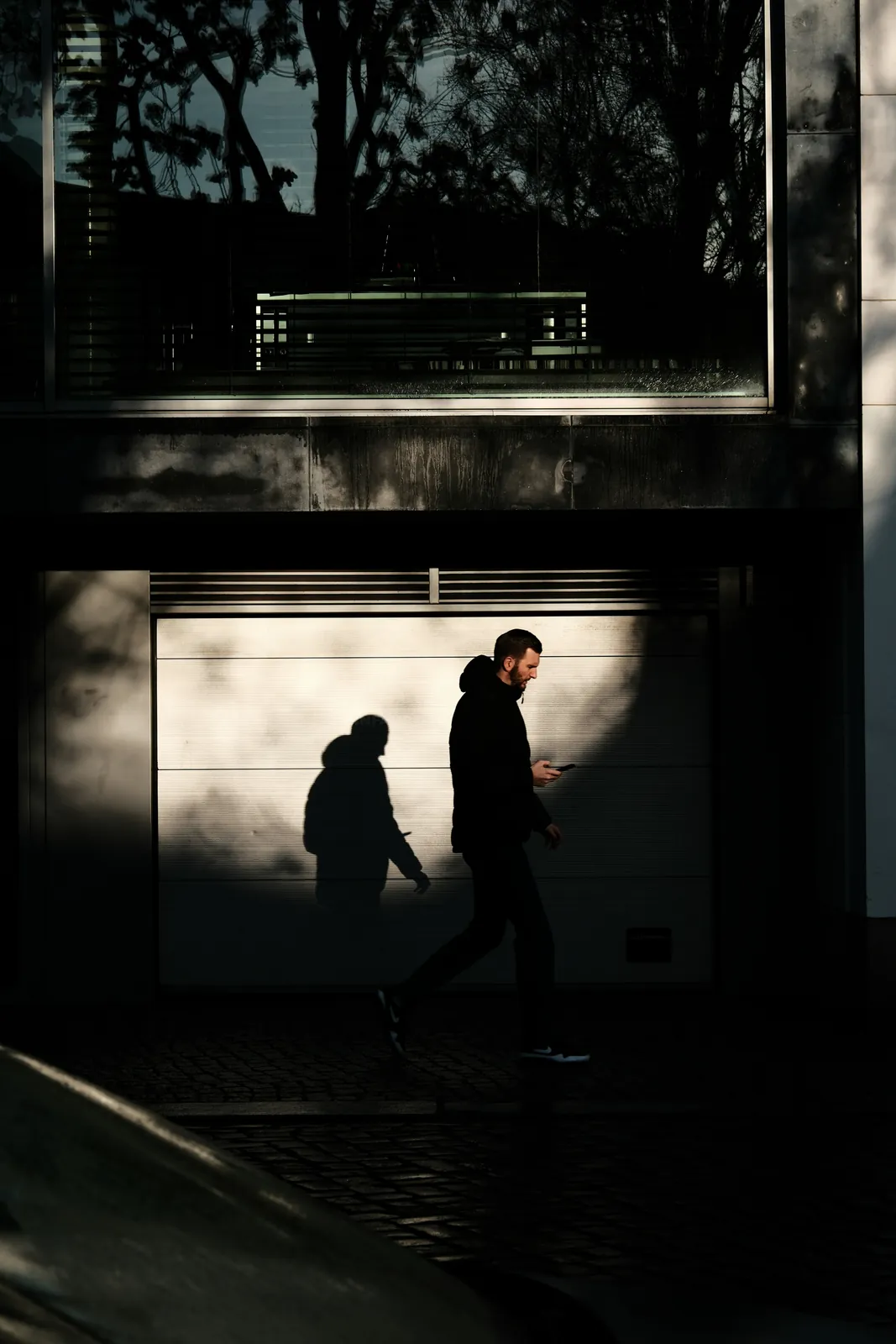
Observing a subject in public space is lawful and forms the backbone of most surveillance investigations. Public footpaths, public car parks, public seating, and public viewing positions on a road that don't involve trespass. From these positions, photographing and filming public activity is generally permitted.
The key qualifier is public space. The same observation carried out from inside the subject's property line, from a neighbour's garden without consent, or by a drone hovering over a private backyard, is not lawful.
Open-source intelligence gathering
Public social media, public business registers, ASIC searches, property ownership records, court records, and electoral rolls accessed by lawful means. This category has grown significantly over the last decade and is now the starting point of most professional investigations. It is also the most cost-effective layer of an investigation, which is why a well-run job begins here before any field work is approved.
Skip tracing through cross-referenced lawful databases
A professional locate or skip tracing service uses a combination of paid commercial databases, public records and structured cross-referencing to find a current address or contact for a subject. Done correctly, this is fully lawful and entirely separate from any unauthorised access to private data.
Interviewing willing third parties
Talking to people who agree to talk, and documenting what they choose to share. Useful in workers compensation, fraud and corporate matters, or even just to locate people. It's amazing what information you can get from people when you ask.
TSCM (technical surveillance counter-measures, or "bug sweeps")
Detecting unauthorised electronic surveillance devices inside a client's own property or office. The client must have lawful access to the space being swept.
What a Licensed PI Cannot Lawfully Do
This is the more important list, because it includes most of what people assume investigators do.
Access private communications without authority
Phone records, banking records, email content, private messages and encrypted chats are all protected. A licensed PI cannot lawfully access them, and anyone who claims they can is offering an unlawful service. The consequences for the evidence are severe: such material is almost always excluded, and the client who commissioned it can face their own exposure.
Place tracking devices on someone else's property
That includes the other party's vehicle in a family law matter, an estranged spouse's car, or a debtor's vehicle. The lawful frameworks for vehicle tracking are narrow and almost always require the consent of the registered owner or specific court authority. The popular "GPS tracker from a private investigator" is a misconception that has sunk many cases.
Record private conversations without consent
The rules around audio recording vary by state, but the general principle in Australia is that recording a private conversation you are not part of requires consent or a specific lawful authority. Conversations in a private home carry the strongest protections.
Trespass to gather evidence
Entering private property without authority, even briefly, even to take a single photograph, is unlawful trespass. Evidence gathered through trespass is generally excluded.
Claim to be police or to have police powers
This is an offence in its own right under most state law. A licensed PI is a private citizen with a licence, not an officer of any kind.
Take any action reserved for law enforcement
Including, but not limited to: arrest (other than a citizen's arrest in narrow circumstances), searching a person or premises, formal interviews under caution, and demanding identification.
The popular image of a private investigator overlaps heavily with police powers the investigator does not have. Anyone offering services that depend on police-style access is either operating outside the law or misrepresenting their work.
What the law in NSW allows (and doesn't)
In NSW, private investigators are licensed by the NSW Police Force under the Security Industry Act 1997. The Commercial Agents and Private Inquiry Agents Act 2004 was repealed in 2022, and private investigators now hold a Class 2E security licence. A business that supplies investigators needs a master licence. Stirling Investigations holds NSW Master Licence 000108692.
The main law on how evidence is gathered is the Surveillance Devices Act 2007 (NSW). It covers four kinds of device: listening devices, optical devices such as cameras, tracking devices, and data surveillance devices that monitor a computer. In plain terms:
- Recording a private conversation you are not part of is an offence. Recording one you are part of is only allowed in limited situations, such as when everyone in it consents.
- Using a tracking device to find where a person, or their car, is without consent is generally an offence.
- Installing a camera is an offence if it means going onto someone's property or into their car without permission, or interfering with their car or belongings.
- Installing a device or program to monitor someone's computer is an offence if it means entering their premises or interfering with the computer without permission.
The Act doesn't stop an investigator observing and filming what happens in public places, which is why our surveillance is carried out from public space. Impersonating a police officer is a crime under the Crimes Act 1900 (NSW), and so is knowingly getting into someone's password protected accounts or data without authority. Intercepting phone calls, texts or emails is prohibited under federal law.
If you're not sure whether something is lawful, ask us before you act, and speak to your lawyer. This is general information, not legal advice.
What can a private investigator legally do in NSW?
In NSW, a licensed private investigator can lawfully observe and film people in public places, search public records and interview people who are willing to talk. Under the Surveillance Devices Act 2007 (NSW), they can't record private conversations they are not part of, use a tracking device on a person or their car without consent, or enter property or interfere with a car or computer without permission to install a camera or monitoring device. This is general information, not legal advice.
Why the Line Matters for the Client
When something important is on the line, it's tempting to ask whether the line could be quietly crossed. The answer from any reputable investigator is no, and not for moral reasons alone.
Evidence gathered unlawfully is:
- Inadmissible in most circumstances, meaning it cannot be used to win the matter it was gathered for
- Actively damaging, because trying to introduce unlawful evidence weakens the credibility of the rest of the case
- A risk for the client, who can in some cases face civil or criminal consequences for having commissioned it
- A risk for the investigator, who can lose their licence and face prosecution
A professional licensed investigator will tell you on the first call which approach is lawful, which is not, and what evidence the lawful approach can realistically produce. If we don't think a lawful investigation will give you what you need, we say so before we quote.
How to Check a Private Investigator Is Operating Lawfully
A short checklist for anyone hiring an investigator for the first time:
- Ask for the current licence number and the state it was issued in
- Confirm the firm holds professional indemnity insurance
- Ask how the firm handles the chain of custody for evidence
- Ask the firm to walk you through their approach to your matter and how each step is lawful
A professional firm will answer all of these without hesitation. If any question is met with evasion, that is your answer.
If you're unsure whether a particular approach in your situation is lawful, the easiest way to find out is to ask, and to speak to your lawyer if the evidence may be used in court. A short conversation costs nothing and can save you significant time and exposure later. Call Stirling Investigations on 1800 403 143.